

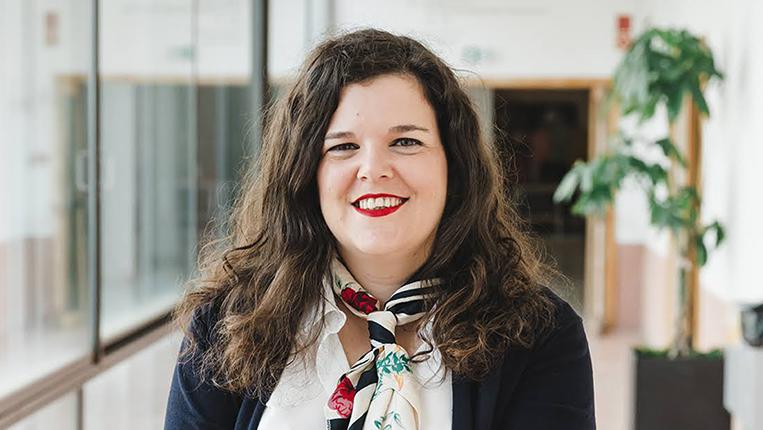

André Luis de Lima Maia is a legal adviser and international mediator. He attended the 1st edition of the Interdisciplinary Postgraduate Programme in Human Rights at Universidade Católica Portuguesa, an “intellectually stimulating” experience with an interdisciplinary and humanistic approach that enabled him to deepen his understanding of Human Rights. In this interview, he reflects on the importance of dialogue between different fields of knowledge, the role of mediation in conflict resolution, and collective responsibility in promoting Human Rights. “The more I study, the more convinced I become that rights and duties complement each other and find their raison d’être in the dignity of the human person.”
Are Human Rights everyone’s responsibility?
Yes, I am convinced that protecting Human Rights is a collective responsibility. For a long time, the prevailing view was that protecting Human Rights was the responsibility of States almost exclusively. Today, that responsibility is much broader. Companies, universities, civil society organisations and citizens themselves are all actors capable of influencing Human Rights, either positively or negatively.
Throughout my career, I have come to realise that Human Rights do not begin with international conventions or end with court decisions. They begin much earlier: in the education we receive at home, in the integrity with which we practise our profession, in the way we treat those who think differently from us, and in the responsibility we assume for our own choices.
Perhaps that is why I increasingly find it difficult to separate rights from duties. The more I study Human Rights, the more convinced I become that the two complement each other and find their raison d’être in the dignity of the human person.
“No single field of knowledge can, on its own, explain all the challenges we face as a society”
Do you consider interdisciplinarity essential to understanding and promoting Human Rights?
Without a doubt... Interdisciplinarity is an essential condition for understanding the complexity of Human Rights. No single field of knowledge can, on its own, explain all the challenges we face as a society. Law provides essential normative tools, but issues such as migration, climate change, artificial intelligence and the protection of vulnerable groups also require contributions from Economics, Sociology, Political Science, Philosophy, Psychology and Management. Interdisciplinarity teaches us to recognise the limits of our own knowledge and to value the contribution of others. This attitude requires intellectual humility and strengthens the ethical independence of legal professionals, making them more cautious and better prepared to address complex problems. In an increasingly interdependent world, I believe that the ability to engage in dialogue across different fields of knowledge is an important skill for any professional working in international affairs and Human Rights.
“One of the aspects that made the greatest impression on me was the programme’s commitment to bringing academic reflection closer to practical reality”
Was this interdisciplinarity what brought you to the postgraduate programme that brings together the Faculty of Law, the Faculty of Education and Psychology and the Cross-Cutting Area for Social Economy?
In 2017, during a period of international training in Malta, where I attended English courses and a course in International Organisations Law at the IMO International Maritime Law Institute (IMLI), I had the opportunity to engage with different European academic institutions. It was also during this period that I began to follow the work of several lecturers at Universidade Católica Portuguesa with particular interest, whose publications I had always regarded as references in the field of Human Rights. Therefore, when, in 2018, already living in Porto, I had the opportunity to attend the first edition of the postgraduate programme, a pioneering programme in its interdisciplinary and humanistic approach, I felt that it was the right step for the academic and professional path I wanted to pursue.
How would you describe your academic experience at Universidade Católica?
It was a demanding and intellectually stimulating academic experience that enabled me to consolidate my knowledge and understand Human Rights from a truly interdisciplinary perspective. One of the aspects that made the greatest impression on me was the programme’s commitment to bringing academic reflection closer to practical reality. In the final stage of the programme, we were challenged to develop projects with practical applicability, showing that promoting Human Rights requires not only sound foundations, but also the ability to cooperate and implement solutions. Another aspect that I remember with great appreciation is the academic and personal relationships I built there, many of which remain to this day.
What motivated you to pursue a career in Law?
From an early age, injustice has always troubled me, both the injustices experienced by people in vulnerable situations, who often lack the means necessary to assert their rights, and those experienced by people who, despite having access to resources, also face vulnerabilities inherent to the human condition, such as abuse of power, corruption, greed and a lack of ethics.
At the same time, I have always cultivated a strong interest in reading, History, Philosophy and different cultures, which sparked in me a constant curiosity about how societies organise themselves and seek to build fairer and more balanced models of coexistence. It was therefore quite naturally that I chose Law.
When did you realise that you wanted to pursue the international dimension of Law?
I believe that this vocation was present in my life long before I recognised it myself. I was born in Maracaibo, Venezuela, lived part of my childhood in Guatemala and grew up in different regions of Brazil, many of them marked by contact with seas and international borders. Initially, these experiences were connected to my father’s professional activity, as he had strong ties with different countries in Latin America and Europe. Later, exchanges, academic activities and, above all, the study of Public and Private International Law, International Organisations and regional Human Rights protection systems during my degree gave greater substance to this vocation. It was then that I realised that I wanted to dedicate my professional life to this dimension of Law, seeking to bring people, cultures, institutions and legal systems closer together.
International experience also shapes the way we look at Law and the world...
Books teach us Law; experience in the field teaches us to understand people. Each country I have lived in or travelled through has left a different mark on the way I see the world and practise Law. Throughout this journey, I have matured not only as a lawyer and mediator, but, above all, as a person. This experience has taught me to approach global legal challenges with greater openness, combining technical rigour with intercultural sensitivity. Today, I seek to value what each reality has to offer, believing that international cooperation is one of the most effective ways of promoting peace, justice and socio-economic development among peoples and nations.
For those seeking to build an international career in this field, what skills do you consider essential beyond legal knowledge?
Legal knowledge is essential, but it is far from sufficient. An international career requires intellectual curiosity, adaptability, proficiency in foreign languages and a genuine openness to learning about other cultures. Just as important as technical skills are human skills: knowing how to listen, communicate clearly, engage in dialogue, negotiate and build relationships based on trust. After all, the practice of Law is built not only on rights, but also on a sense of service, duties and responsibilities.
“Genuine dialogue is only possible when there is willingness. No agreement can be imposed”
In addition to the Interdisciplinary Postgraduate Programme in Human Rights, you also attended the Course in Conflict Mediation at the Faculty of Law – Porto School. What led you to complement your training in this area?
Mediation is a valuable complement to legal, business and diplomatic practice and can be applied in a wide range of areas, including criminal, civil, employment, tax, environmental, commercial and even educational matters. Often, a court decision resolves the dispute, but does not restore trust or relationships between people. Whenever possible, legal and management professionals should prioritise dialogue and the peaceful resolution of conflicts, resorting to the courts only when this is genuinely necessary. It was precisely this perspective that led me to seek specialisation in Conflict Mediation, in order to understand conflicts not only as problems, but also as opportunities for improvement and transformation.
What learning from mediation do you consider most relevant for those working in international contexts?
One of the greatest lessons I learned from mediation was that genuine dialogue is only possible when there is willingness. No agreement can be imposed; the parties need to sit at the table voluntarily and with a willingness to listen. Taking this first step alone already represents, in many cases, significant progress.