
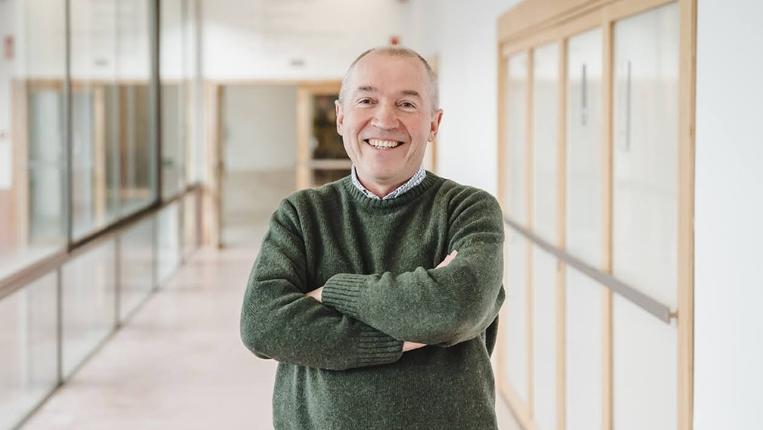
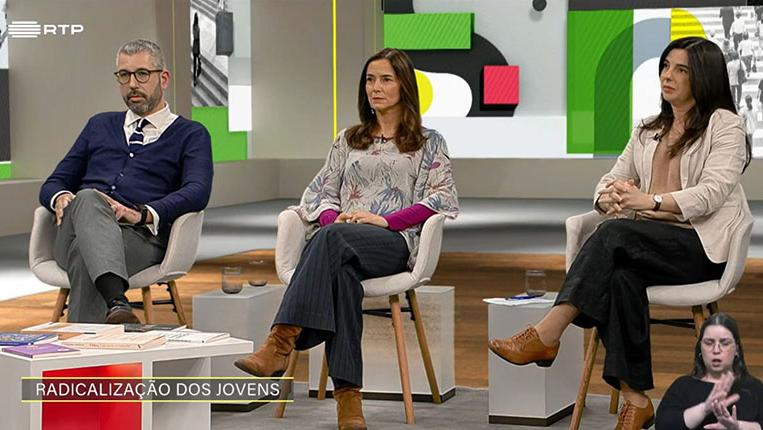

Testimony of Érica Soares, alumna of the Faculty of Education and Psychology of the Universidade Católica Portuguesa (FEP‑UCP). Her academic and professional journey shows how training in Psychology can open doors to demanding and socially relevant fields, such as Forensic Psychology.
Érica Soares began her Bachelor’s degree in Psychology at FEP‑UCP in 2019 and completed, in 2024, her Master’s degree in Psychology with a specialisation in Psychology of Justice and Deviant Behaviour. She is currently undertaking her Junior Professional Year at the Forensic Office of the ISPA Clinic (University Institute of Psychological, Social and Life Sciences), where she carries out Forensic Psychological Assessment Examinations within the scope of Child Protection Proceedings - an area that combines technical rigour, ethical responsibility, and a strong human dimension.
Her daily professional routine is marked above all by the preparation of assessments. Analysing case files, structuring sessions, sending summons, and drafting psychological reports occupy much of her time and require high levels of concentration and dedication. Even so, it is the moments of direct contact with people that she values most. “What I enjoy in this work is the direct contact with people; the days I like the most are those when I have assessment sessions,” she explains, acknowledging that report writing is a particularly demanding task.
Motivation, ethics, and the protection of children
Érica’s main source of motivation lies in her curiosity about people and their life stories. In a context where many of these stories are marked by difficult experiences, she shares: “I am interested in understanding them in light of what I learned throughout my academic journey, but also from a human and close perspective”.
The fact that her work is directly linked to the protection of children and the safeguarding of their rights reinforces the sense of purpose with which she approaches her profession. Feeling that she can contribute to safer family environments and developmental trajectories is something she deeply values and which sustains her daily motivation.
Among the most striking moments of her professional experience, she highlights an assessment related to the credibility of a child’s testimony in a potentially traumatic situation. The impossibility of gathering the necessary information proved frustrating but also deeply formative. “I felt the need to fulfil what had been requested of me and somehow help the child, but I realised it would not be possible to answer the questions and inform the Court,” she recalls. This experience reinforced the importance of managing the conflict between personal feelings and professional conduct, always maintaining an ethical stance, even in emotionally demanding contexts.
The mark left by the Faculty of Education and Psychology
Her academic journey at FEP‑UCP was decisive in consolidating the values that now guide her professional practice. Both the bachelor’s and the master’s degree reinforced, according to Érica, the importance of rigour and professional ethics. Although FEP‑UCP is known for its close and relaxed academic environment, there was always a strong sense of responsibility and commitment, which she now recognises as an essential foundation of her work.
Some lecturers and modules had a particularly significant impact on her path. In the first year, the History of Psychology classes with Professor António Fonseca showed her that “demand and enjoyment could coexist”, in a context where she felt truly challenged and motivated. Later, it was with Professor Catarina Ribeiro that she discovered her passion for Forensic Psychology. “It was around this time that I began to imagine my future more seriously - I realised that was the direction I wanted to take,” she explains, highlighting the importance of practical examples in shaping that interest.
The close relationship between lecturers and students is one of the characteristics of FEP‑UCP that Érica believes will stay with her forever. Feeling she was in a safe environment to question, make mistakes, debate, and learn at her own pace was essential for her personal and professional development. Classes in which topics were explored through case studies and discussion moments were especially enriching for her, in a course that she recognises as being, by nature, highly theoretical.
The advice she leaves to current Psychology students comes from her own experience, of a path lived in the present. “Instead of focusing on the distance or the difficulties that were still to come, I lived the course one day at a time,” she shares.
Now, she encourages students to make the most of each moment, of the people around them, and everything the faculty has to offer.